


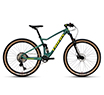
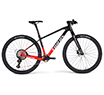
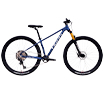

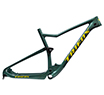
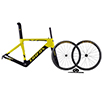
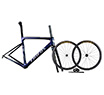
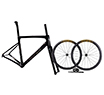
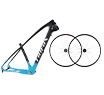
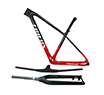
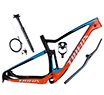
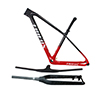
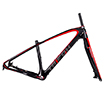





A full-suspension mountain bike lives or dies by its rear suspension. The right design transforms a rough trail into a flowing ribbon of traction and control. The wrong one leaves you fighting pedal bob, brake jack, and a rear wheel that refuses to track. The Trifox MFM100 carbon full-suspension frame is engineered around a four-bar linkage system with a Trunnion-mounted rear shock—a combination that prioritizes climbing efficiency, descending composure, and long-term reliability. Here's how this suspension design works and why it makes the MFM100 an outstanding mtb trail bike frame for XC and light trail riding.
Four-Bar Linkage: The Science of Predictable Traction
The MFM100 employs a Horst-link-style four-bar linkage, a design proven over decades of mountain bike development. Unlike a simple single-pivot system, a four-bar linkage uses a series of linkages to create a virtual pivot point—a floating center of rotation that can be positioned anywhere the designer chooses. This unlocks two critical benefits for trail performance.
Anti-Squat and Pedaling Efficiency: Anti-squat measures how much the suspension resists compressing under pedaling forces. Too little anti-squat, and the bike bobs excessively on climbs. Too much, and the suspension becomes harsh and unresponsive. With a four-bar linkage, the designer can tune the anti-squat curve to be maximally effective right at the sag point—where the bike sits most of the time—while relaxing it deeper in the travel. The result is a frame that climbs with the urgency of a hardtail but remains active and plush over roots and rocks.
Anti-Rise and Braking Stability: Anti-rise describes how braking forces affect suspension compression. When you grab the brakes on a steep descent, some designs cause the rear suspension to stiffen (high anti-rise), reducing traction and control. The four-bar layout of the MFM100 reduces the effect of braking forces on the suspension, meaning the rear wheel stays active and glued to the trail even when you're on the anchors.
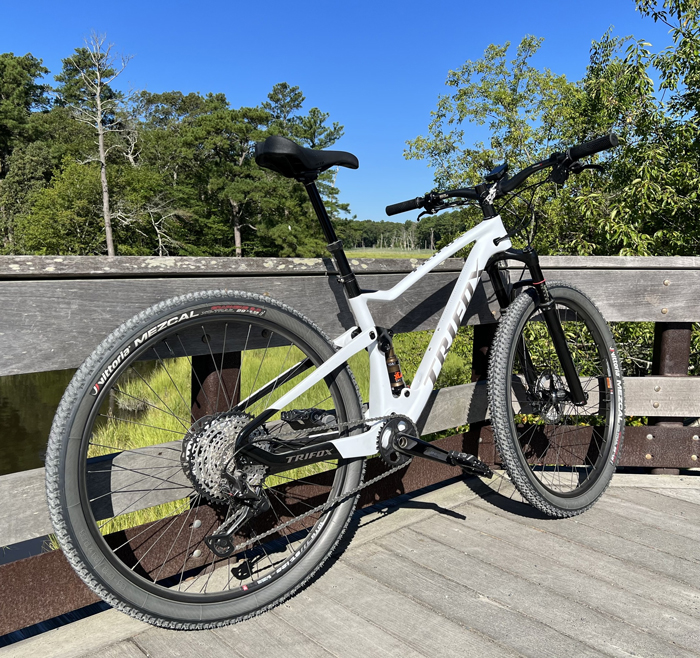
For riders pushing hard on technical descents, this predictable, unflappable rear-end behavior is what separates a confidence-inspiring mtb trail bike frame from one that keeps you guessing. Independent reviews confirm that the MFM100 tracks straight on steep, rocky runs, with the carbon frame staying composed under hard hits.
Trunnion Mount: A Compact, Efficient Shock Interface
The MFM100 features a Trunnion rear shock mount, a design that has rapidly become the standard on modern performance frames. Instead of the traditional eyelet-and-bolt attachment at both ends, a Trunnion mount secures the shock at two points on the frame. This design choice delivers several tangible benefits.
Improved Suspension Performance: The Trunnion mount allows the shock to pivot more freely around its mounting points, producing a smoother, more linear suspension curve. The shock compresses and extends with less friction, translating to better traction and control on uneven surfaces.
Reduced Weight and Enhanced Geometry: By eliminating the need for long eyelets and reducing the overall length of the shock, the Trunnion mount contributes to a lighter overall frameset. It also allows frame designers to optimize bike geometry and create better clearance for larger tires. On the MFM100, this translates to generous tire clearance up to 29×2.35 inches, giving you the freedom to run high-volume rubber for comfort and traction.
T800 Carbon: Stiff, Light, and Composed
All this sophisticated suspension hardware is wrapped in a T800 carbon fiber frameset. T800 is a high-modulus carbon fiber known for its excellent stiffness-to-weight ratio. The result is a frame that weighs just 2170–2420 grams depending on size (XS to L)—remarkably light for a full-suspension chassis. More importantly, the carbon construction provides the lateral stiffness needed to keep the bike tracking precisely through corners and under power.
Riders who have built up the MFM100 consistently praise its rigidity. One owner noted that the frame is "very fast and rigid," with pedaling force transmitting directly to the wheels without wasteful flex. On the descents, the carbon frame stays composed and planted, never feeling nervous or twitchy.
Versatility: From Geared Trail Bike to Single Speed
The MFM100's T800 carbon frame and threaded BSA 68mm bottom bracket provide an exceptionally versatile platform. While it's designed for geared 1× drivetrains, its solid rear triangle and robust pivot construction also make it a surprisingly capable candidate for a single speed bike frame build.
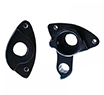
Converting a full-suspension frame to single speed requires a chain tensioner mounted to the derailleur hanger (the MFM100 uses a replaceable hanger). The bike's four-bar linkage exhibits minimal chain growth through its travel, which keeps the chain tension stable and reduces the risk of drivetrain binding or chain snap—a common issue when converting less sophisticated suspension designs to single speed. For riders seeking an ultra-low-maintenance, quiet, and mechanically pure trail experience, the MFM100 offers a compelling single-speed platform.
Trail-Ready Geometry and Modern Standards
The MFM100's geometry is tuned for modern XC and trail riding. A 68.5° head tube angle provides stability at speed without sacrificing front-end traction on climbs. The 74.7° seat tube angle places the rider in a powerful, centered pedaling position. Boost 148×12mm rear spacing increases wheel stiffness and allows for shorter chainstays, enhancing agility. Internal cable routing keeps the frame clean and protects hoses from trail debris.
Conclusion
The Trifox MFM100 carbon full-suspension frame delivers a suspension system that punches well above its price class. The four-bar linkage provides tunable anti-squat for efficient climbing and reduced anti-rise for confident braking. The Trunnion-mounted rear shock ensures smooth, linear suspension action while saving weight and improving geometry. And the T800 carbon construction offers the stiffness and light weight that serious riders demand. Whether you're building a dedicated XC race machine, a versatile mtb trail bike frame, or even a minimalist single speed bike frame, the MFM100 is a platform that handles the trail with composure and confidence.
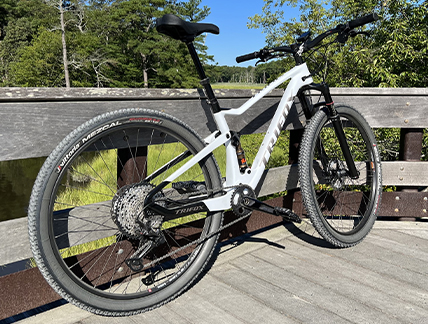
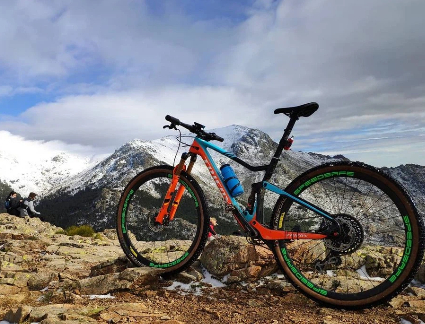
What if the best upgrade for your mountain biking wasn't a new set of grips, a lighter wheelset, or a fancier component, but the entire bike itself? We often chase incremental gains by swapping parts, overlooking the transformative leap available with modern, complete bikes. Specifically, we're talking about a carbon fiber full-suspension mountain bike, a category historically associated with premium prices. What if you could have that total performance upgrade for just $1,399? This is the reality offered by the Trifox Pioneer, a ready-to-ride package that completely resets expectations for value in the mtb trail bike category.
Let's break down why this represents such a profound value proposition. The foundational upgrade is the full carbon fiber frame (MFM100). Carbon provides the ideal blend of stiffness for efficient pedaling and compliance to smooth out trail chatter, all at a significantly lower weight than aluminum. This isn't a stripped-down, basic carbon frame; it's the core of a modern, 120mm-travel trail bike designed to handle a wide variety of terrain. Combined with a 140mm travel fork and a 115mm travel rear shock, the Pioneer is built to boost confidence and capability on the trail, making it a versatile cross country mountain bike that's also ready for more adventurous terrain.
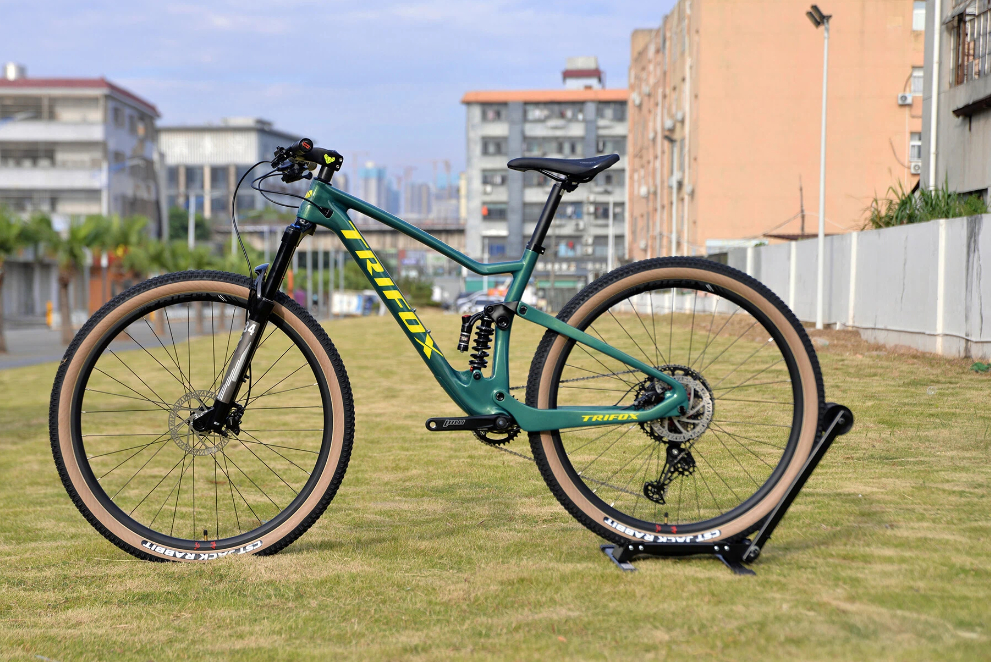
The value extends deep into the components, where the Pioneer is equipped to perform, not just exist. The centerpiece is the full Shimano Deore M6100 12-speed groupset. This is a legitimate, professional-level 1x12 drivetrain offering a massive gear range (11-50T cassette) and reliable, crisp shifting. For braking, it features Shimano MT200 hydraulic disc brakes, providing consistent, powerful stopping control. The bike also comes with a carbon integrated handlebar and stem for a clean, stiff front end, and a complete wheelset with 2.25" tires ready for traction. This is a thoughtful, performance-oriented spec, not a collection of bargain-bin parts.
Now, consider the total cost of ownership and convenience, which is where the value becomes undeniable. For U.S. buyers, the $1,399 price is final—with no sales tax added. The bike ships from a U.S. warehouse, meaning you avoid long international shipping waits, hefty import duties, and unpredictable customs fees. Delivery is fast, and the bike arrives mostly assembled, requiring only simple final steps. You get a modern, capable, and lightweight carbon full-suspension bike delivered to your door for a price that often only covers a high-quality aluminum hardtail elsewhere.
So, who is this incredible upgrade for? It's perfect for the rider on an aluminum hardtail looking to experience the comfort and capability of full suspension. It's ideal for the enthusiast wanting to step into the world of carbon performance without a four-figure investment. It's a brilliant choice for anyone seeking a modern, reliable trail bike as their primary ride. When you add up the carbon frame, the quality 12-speed drivetrain, and the hassle-free U.S. purchase experience, the Trifox Pioneer isn't just an upgrade to a single component. It's a complete, ground-up transformation of your trail riding experience for an amount that truly costs less than you think.
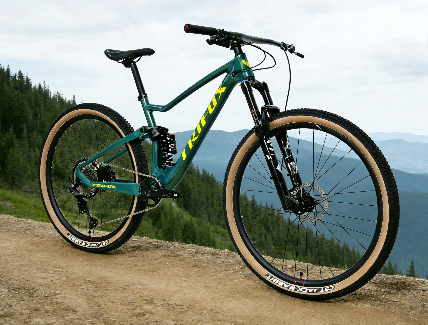
In the world of mountain biking, performance has traditionally come with a premium price tag—until now. The TRIFOX Pioneer shatters this paradigm by delivering a complete carbon fiber fully suspended mountain bike with a Shimano R6100 groupset for just $1399. This isn't a stripped-down compromise; it's a thoughtfully engineered trail machine designed specifically for mtb cross country xc, daily trail riding, and adventure-seeking cyclists who demand quality without breaking the bank.
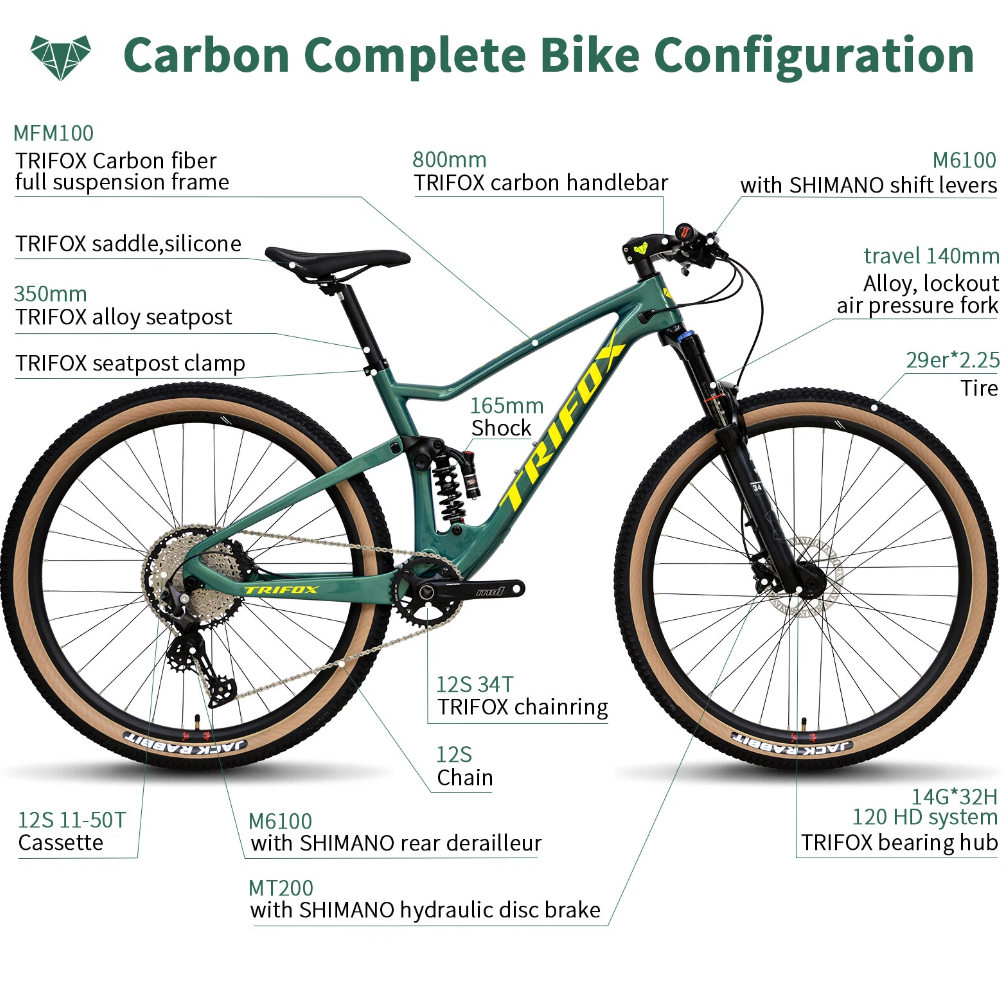
At the heart of the Pioneer is its full carbon frame, a feature rarely found at this price point. Carbon fiber construction offers more than just weight savings; it provides the perfect balance of stiffness for efficient pedaling and compliance for trail comfort. The frame's modern trail geometry—with a slack head angle for descending confidence and balanced chainstays for climbing stability—creates a versatile platform that handles everything from flowy singletrack to technical root sections. Available in multiple sizes and colors, the Pioneer ensures both proper fit and personal expression.
The suspension system is precisely calibrated for its intended use. With 140mm of travel front and rear, this fully suspended mountain bike provides enough cushion to smooth out trail chatter and handle moderate obstacles without the weight and inefficiency of longer-travel enduro rigs. The suspension kinematics are optimized for pedaling efficiency, meaning you get traction and comfort when you need it without excessive bob on climbs. For mtb cross country xc enthusiasts and weekend trail riders, this "just right" travel hits the sweet spot between capability and efficiency.
Component selection demonstrates intelligent prioritization. The Shimano R6100 1x12 drivetrain delivers reliable, precise shifting across a wide gear range—essential for varied terrain where maintaining momentum is key. Quality hydraulic disc brakes provide consistent stopping power in all conditions, while tubeless-ready wheels offer the option for lower tire pressures and improved traction. Every component choice reflects an understanding of what matters most for trail performance: reliability, functionality, and real-world durability.
What makes the $1399 price truly remarkable is the holistic integration of these elements. This isn't simply a collection of parts bolted together; it's a cohesive system where the carbon frame, suspension tuning, and component selection work in concert. The result is a bike that feels greater than the sum of its parts—responsive on climbs, composed on descents, and agile through technical sections. For riders moving up from entry-level hardtails or aluminum full-suspension bikes, the difference in ride quality is immediately apparent.
The Pioneer's versatility extends beyond pure trail riding. Its efficient pedaling platform makes it suitable for longer adventures, while its capable handling inspires confidence on more challenging terrain. It's the ideal "one bike" solution for riders who don't specialize in extreme downhill or endurance racing but want a competent, enjoyable companion for their local trails, weekend group rides, and spontaneous adventures.
It's important to note the Pioneer's design boundaries. With 140mm travel and trail-oriented geometry, it's not intended for bike park downhill runs or enduro racing. This clarity of purpose is actually a strength—by focusing specifically on trail and XC riding, TRIFOX has optimized every aspect of the bike for that experience without unnecessary compromises or costs.
In an industry where carbon full-suspension bikes often start at twice this price, the TRIFOX Pioneer represents a fundamental shift. It proves that advanced materials and quality components don't have to be reserved for elite budgets. For $1399, you're not getting a "budget bike"—you're getting a thoughtfully engineered fully suspended mountain bike that delivers genuine carbon performance, capable suspension, and reliable shifting. The Pioneer isn't just affordable; it's a smart investment in trail enjoyment, redefining what's possible at this price point and inviting more riders to experience the benefits of modern carbon mountain bike technology.
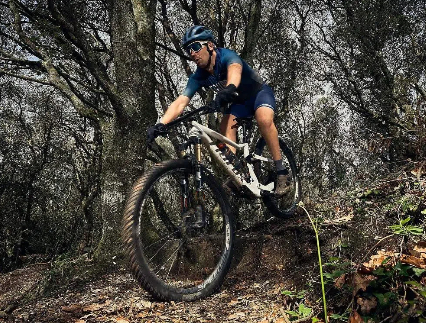
Choosing a carbon mountain bike is about matching technology to terrain. Not all trails demand the same bike, and understanding this relationship helps you select the perfect companion for your riding style. While enduro and downhill bikes dominate technical descents, there's a sweet spot for riders who prioritize efficiency, climbing capability, and playful handling on varied singletrack. This is where thoughtful design—like the Trifox Pioneer 29er full suspension bike—truly shines.

For cross-country (XC) enthusiasts and trail riders, the primary considerations differ significantly from enduro or downhill priorities. Weight becomes a crucial factor when you're spending hours climbing and covering long distances. A true lightweight full suspension mountain bike like the Pioneer offers the perfect balance: enough suspension to smooth out trail chatter and handle moderate obstacles while remaining efficient on climbs and flats. Carbon fiber construction is key here, providing the stiffness-to-weight ratio that aluminum can't match, ensuring every pedal stroke translates to forward motion.
The Pioneer's suspension design represents what many riders seek in a modern soft tail mountain bike—enough travel to enhance control and comfort without compromising pedaling efficiency. With its 120mm front and rear travel, it's specifically tuned for trail and XC use, absorbing small to medium impacts while maintaining excellent power transfer. This "just right" approach means you're not carrying unnecessary suspension weight or geometry compromises for terrain you rarely encounter.
Geometry plays a pivotal role in trail experience. The Pioneer features modern trail geometry that's more progressive than traditional XC bikes but more nimble than enduro rigs. A moderately slack head angle provides stability on descents without sacrificing climbing prowess. The chainstay length and bottom bracket height create a balanced feel that encourages playful handling on twisty singletrack while remaining stable at speed. This careful calibration makes it adaptable to everything from flowing forest trails to technical rock gardens.
Component selection further defines the bike's character. Equipped with a Shimano R6100 groupset, the Pioneer delivers reliable, precise shifting across a wide gear range—essential for varied terrain where quick shifts maintain momentum. Quality suspension components complement the carbon frame's capabilities, ensuring the bike handles predictably. The complete package demonstrates how thoughtful specification creates a bike greater than the sum of its parts.
What makes the Pioneer particularly compelling is its all-around capability. It's neither an ultra-lightweight race machine nor a heavy-duty bruiser. Instead, it occupies the versatile middle ground where most trail riders actually spend their time. It climbs efficiently, descends confidently, and handles technical features competently. For riders who enjoy varied terrain rather than specializing in extreme downhill or pure racing, this versatility is exactly what's needed.
Ultimately, selecting the right carbon mountain bike comes down to honest assessment of your riding style and local trails. If your rides mix climbing with descending, value efficiency alongside capability, and prioritize fun over specialization, a balanced lightweight full suspension mountain bike like the Trifox Pioneer offers exactly what you need. It proves that the best bike isn't necessarily the one with the most travel or lightest weight, but the one that enhances your specific trail experiences most consistently.
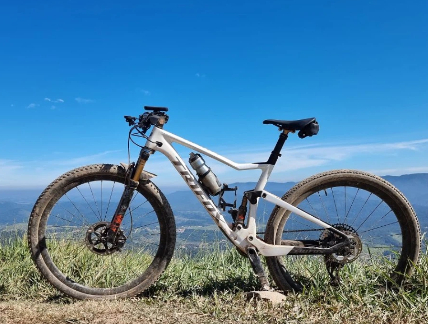
When it comes to conquering varied terrain, from steep technical climbs to flowing descents, having the right equipment makes all the difference. The Trifox 29er Carbon Full Suspension Trail Pioneer Bike represents the perfect balance of climbing efficiency and descending capability, making it an ideal choice for riders looking to master every aspect of trail riding.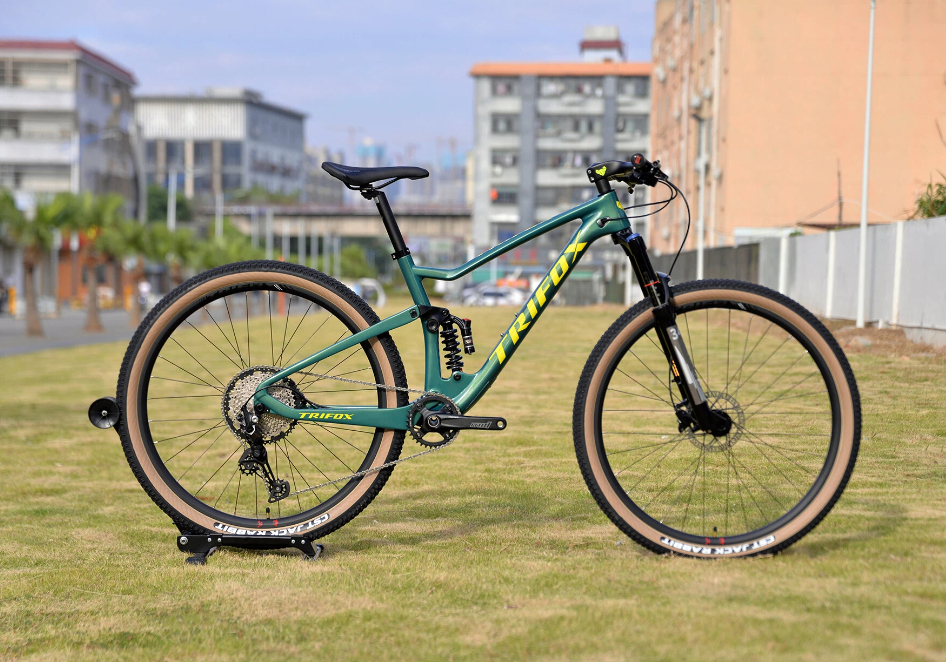
The Ultimate Trail Companion
A true full suspension trail bike needs to perform equally well going up as it does coming down. The Trifox Trail Pioneer excels in this regard, featuring a lightweight carbon frame that efficiently transfers power during climbs while the suspension system absorbs bumps and maintains traction. This combination makes it not just another mountain bike, but a genuine trail partner that enhances your riding experience regardless of the terrain.
Confidence-Inspiring Braking Performance
Modern trail riding demands reliable stopping power, and the mountain bike disc brakes on this bike deliver exactly that. Whether you're navigating technical rock gardens or carrying speed into bermed corners, the hydraulic disc brakes provide consistent modulation and power. This braking performance, combined with the bike's balanced geometry, gives riders the confidence to push their limits while maintaining full control.
Cross Country Performance Meets Trail Capability
While many bikes specialize in either climbing or descending, the Trifox Trail Pioneer truly bridges the gap between a pure cross country bike and a capable trail machine. The efficient pedaling platform and lightweight construction make it an excellent xc bike for covering long distances, while the generous suspension travel and modern geometry ensure it remains composed on challenging descents.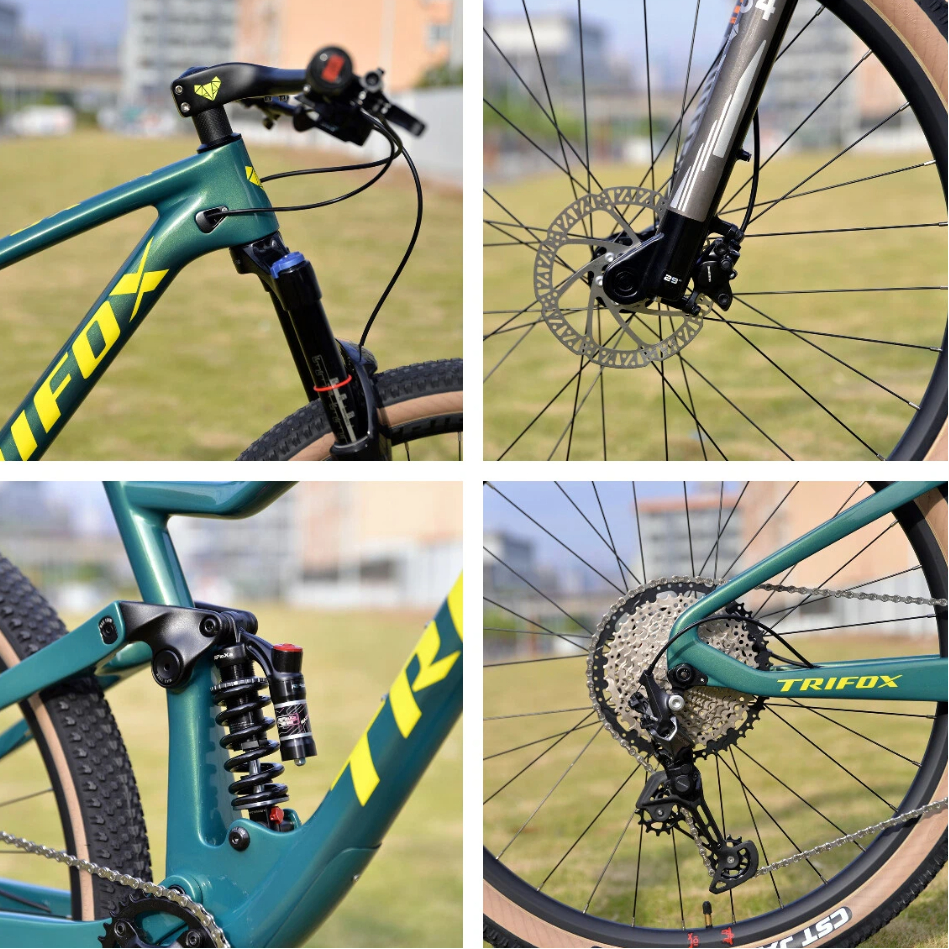
The 12-Speed Advantage
The inclusion of a 12-speed drivetrain significantly enhances the bike's capability across varying terrain. With a wider gear range than traditional systems, riders can tackle steep climbs without sacrificing top-end speed on flats and descents. The precise shifting and reliable performance of the 12-speed system ensure you're always in the right gear, whether you're grinding up a technical climb or accelerating out of corners.
Exceptional Value in Carbon Full-Suspension
Carbon full-suspension bikes often come with premium price tags, but the Trifox Trail Pioneer challenges this notion by offering what might be the cheapest full suspension mtb with genuine carbon construction and quality components. This accessibility means more riders can experience the benefits of a lightweight carbon frame and capable suspension without breaking the bank.
Ready for Whatever the Trail Throws at You
From rocky ascents that demand precise technical climbing to flowing descents where speed and control are paramount, this bike is designed to handle it all. The balanced suspension kinematics provide both pedaling efficiency and bump-eating compliance, while the carbon frame offers the perfect blend of stiffness and vibration damping. It's a bike that encourages progression and rewards skill development.
The Trifox 29er Carbon Full Suspension Trail Pioneer represents a new era of accessible high-performance mountain biking. By combining carbon construction, capable suspension, and modern components at an attractive price point, it removes barriers to entry for riders seeking to master all aspects of trail riding.
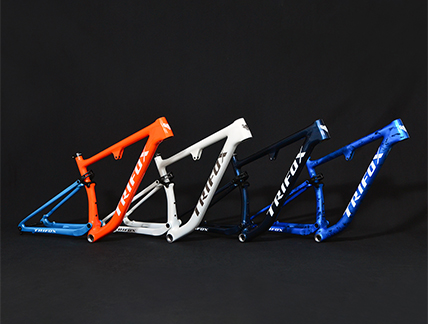
Embarking on the journey to build your dream cross-country (XC) mountain bike is an exciting endeavor. At the heart of this project lies the most critical decision: selecting the perfect frame. A 29er XC full suspension carbon frame represents the ultimate fusion of speed, efficiency, and control, designed to conquer demanding trails while remaining lightweight and responsive.
But with a myriad of options available, how do you ensure you're making the right choice? This comprehensive guide will walk you through the essential factors to consider, using the exemplary TRIFOX Trail II Pro Full Suspension Carbon MTB Frame as a benchmark for what a top-tier frame should offer.
1. Geometry: The Blueprint of Performance
The geometry of a frame is the DNA of your bike's handling characteristics. For modern XC and downcountry riding, the goal is a blend of aggressive climbing efficiency and confident descending stability.
Head Tube Angle (HTA): A slacker HTA boosts stability on technical descents. The TRIFOX Trail II Pro features a 67.5-degree head angle, which is progressive for an XC frame, providing increased confidence when the trail turns downward.
Seat Tube Angle (STA): A steeper STA positions the rider optimally over the bottom bracket, enhancing climbing efficiency and power transfer. The Trail II Pro's 75.5-degree seat angle ensures you can tackle steep climbs effectively.
Reach and Stack: These measurements define your cockpit space and riding posture. Modern geometries tend toward longer reach and lower stack for improved stability and a more aerodynamic riding position.
Why it matters: The right geometry ensures the bike feels intuitive and responsive. The Trail II Pro's geometry strikes a perfect balance, making it adept at both winning races and tackling technical trail features.
2. Suspension Design: The Heart of the Ride
A full-suspension XC bike must offer traction and comfort without compromising pedaling efficiency. The design of the suspension linkage is paramount.
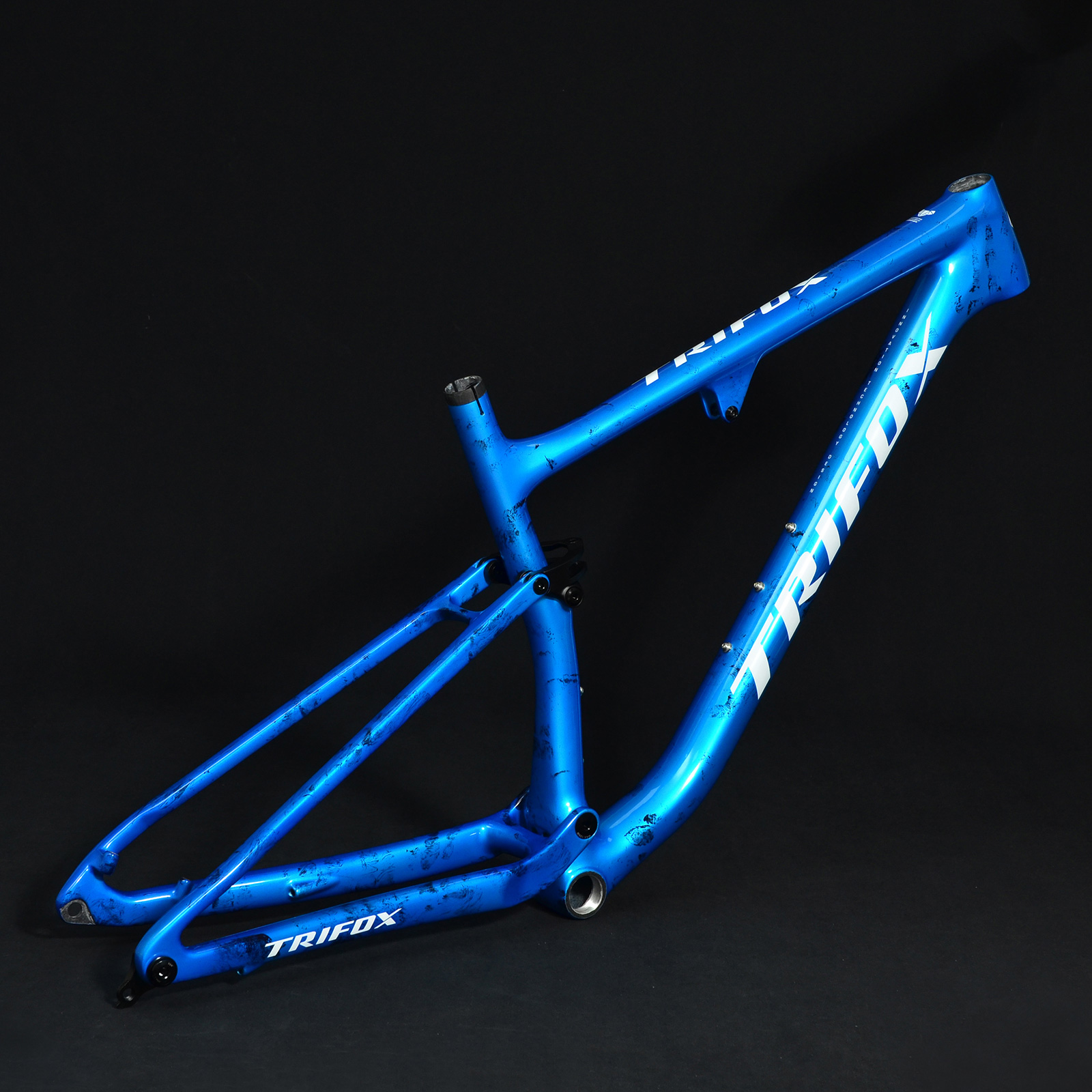
Linkage Type: The TRIFOX Trail II Pro employs a highly efficient four-bar suspension system. This design is renowned for its ability to minimize pedal bob, ensuring that your energy is directed into forward momentum rather than being absorbed by the suspension.
Travel: For XC purposes, 35-45mm of rear travel is the gold standard. It provides sufficient absorption for rough terrain and maintains grip without sacrificing the snappy, efficient feel essential for climbing and acceleration. The Trail II Pro is designed around this ideal 35-45mm of travel.
Anti-Squat and Kinematics: Advanced suspension kinematics with high anti-squat values keep the frame taut under power, translating to efficient pedaling—a non-negotiable trait for any serious XC frame.
3. Carbon Fiber Quality: Where Engineering Meets Art
The grade and construction of the carbon fiber directly influence weight, stiffness, compliance, and overall durability.
Carbon Grade: Look for frames utilizing high-modulus carbon fibers. The TRIFOX Trail II Pro is crafted from T800 carbon fiber, a premium material that allows for an exceptional strength-to-weight ratio. This results in a frame that is both incredibly light and impressively robust.
Layup Process: The artistry of carbon frame building lies in the layup. Precision hand-laying allows engineers to tailor the flexibility and stiffness in specific areas. The down tube and bottom bracket can be reinforced for stiffness and power transfer, while the seat stays can be designed to offer vertical compliance, smoothing out trail vibrations.
Why it matters: A high-quality carbon frame like the Trail II Pro delivers a ride quality that is stiff and responsive when you stamp on the pedals yet surprisingly comfortable over long, rugged distances.
4. Modern Features and Compatibility: Future-Proofing Your Investment
A modern frame must adhere to current component standards to ensure compatibility and ease of upgrades.
Dropper Post Compatibility: The ability to run a dropper post is essential for modern trail riding. The Trail II Pro features internal routing for a 30.9mm dropper post, allowing for a clean setup and confident descending.
Boost Spacing: The frame boasts 148x12mm Boost rear spacing and 110x15mm front spacing. This standard increases wheel stiffness, improves tire clearance, and enhances overall handling precision.
Threaded Bottom Bracket: A BSA threaded bottom bracket is a signature feature of a well-thought-out frame. It is renowned for its reliability, ease of maintenance, and resistance to creaking—a common issue with press-fit systems.
Internal Cable Routing: Full internal routing for derailleur and dropper posts not only creates a sleek, aesthetic look but also protects the cables from dirt and damage.
5. Weight and Value Proposition
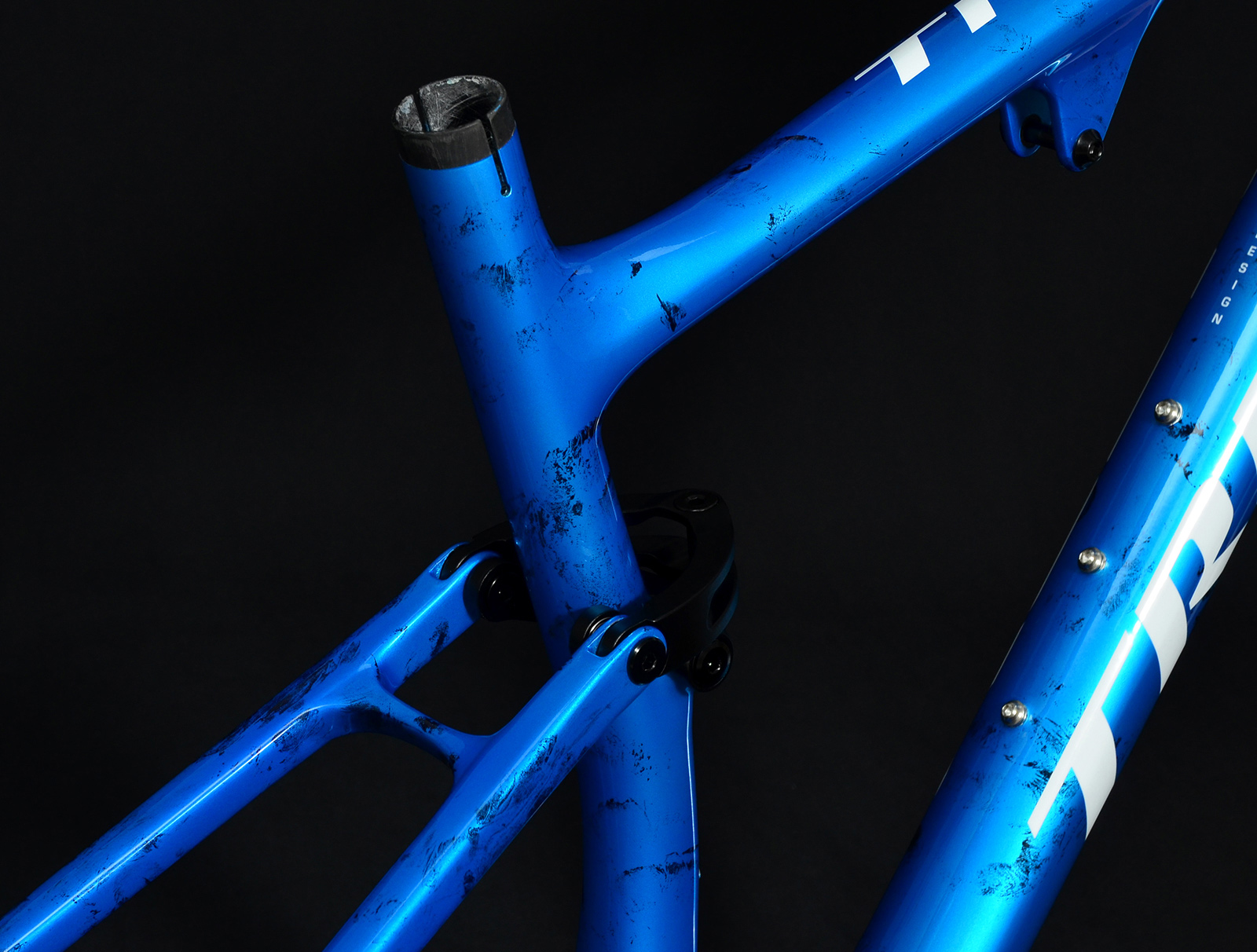
The pursuit of lightness is central to XC. The TRIFOX Trail II Pro frame weighs approximately 1272g-1336g, placing it firmly in the competitive range for high-performance carbon frames. When evaluating price, consider the value offered by direct-to-consumer brands like TRIFOX, which provide cutting-edge technology and materials at a fraction of the cost of many major brands.
Conclusion: The TRIFOX Trail II Pro – A Paradigm of Intelligent DesignSelecting the perfect frame is a process of matching your riding ambitions with engineering excellence. By focusing on geometry, suspension design, carbon quality, and modern features, you can make an informed decision that will define your ride for years to come.
The TRIFOX Trail II Pro 29er XC Full Suspension Carbon Frame emerges as a standout option that exemplifies these principles:
Its modern geometry inspires confidence across diverse terrain.
The efficient four-bar suspension delivers traction without compromise.
The T800 carbon construction offers a sublime blend of lightness and strength.
Its future-proof features ensure compatibility with the best components on the market.
By using this guide and the Trail II Pro as a reference, you are equipped to choose a frame that will form the foundation of an exceptional mountain bike, ready to push the limits of speed and performance.
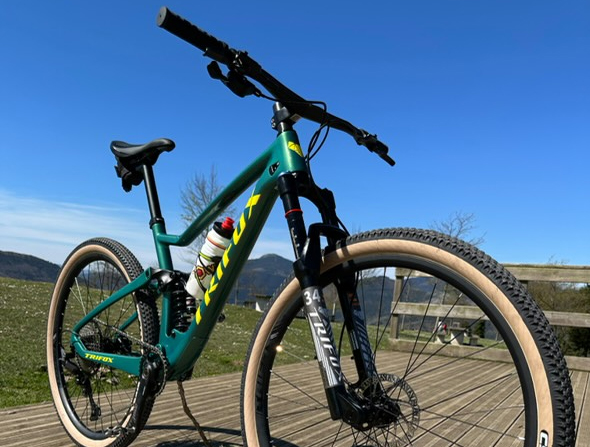
Mountain biking thrives on adrenaline, but as trails get gnarlier, your hardtail might struggle. So, when is it time to switch to a full suspension bike?
1. Your Terrain Demands It
If you’re tackling rocky descents, root-covered paths, or technical drops, a full suspension bike absorbs shocks better, keeping you in control. TrifoxBike’s designs, like the Trifox Full Suspension MTB, feature optimized rear travel to smooth out rough trails, reducing fatigue and improving traction.
2. Your Riding Style Gets Aggressive
Downhill shredders, jump enthusiasts, and enduro racers benefit from dual suspension. The added stability at high speeds and landings protects your body and bike. TrifoxBike’s frames balance lightweight durability with responsive suspension, ideal for pushing limits.
3. You Ride Frequently
Regular riders logging long hours need comfort. Full suspension reduces joint strain, letting you ride longer. TrifoxBike integrates ergonomic designs without sacrificing efficiency, making their bikes a smart choice for daily adventurers.
4. Your Skills Outgrow Your Bike
Advanced riders tackling steeper lines or faster corners need bikes that match their progression. Full suspension offers confidence to tackle technical features. TrifoxBike’s models support skill growth with precision handling and adjustable setups.
5. Budget Allows for Investment
While pricier than hardtails, TrifoxBike delivers high-value builds with premium components like air shocks and durable pivots. If your riding justifies the cost, it’s a worthy upgrade.
6. You Prioritize Traction
Wet, loose, or uneven terrain demands grip. Full suspension maintains tire contact, enhancing control. Pair this with TrifoxBike’s grippy tire compatibility, and you’ve got a trail-eating machine.
7. Maintenance Doesn’t Intimidate You
Full suspension requires more upkeep, but TrifoxBike’s reliable seals and accessible pivot points simplify care, ensuring longevity.
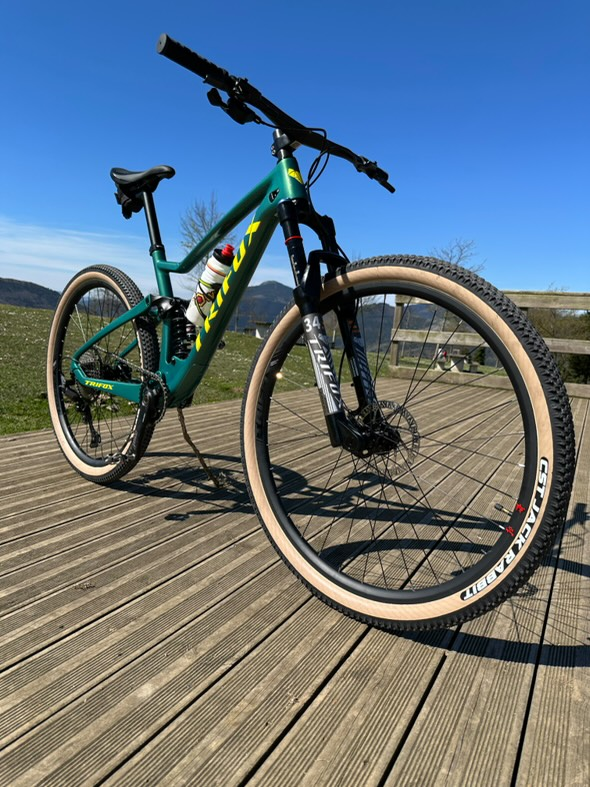
Upgrade if your trails, style, or ambition demand more. TrifoxBike’s full suspension range blends performance and value, ready to elevate your ride.
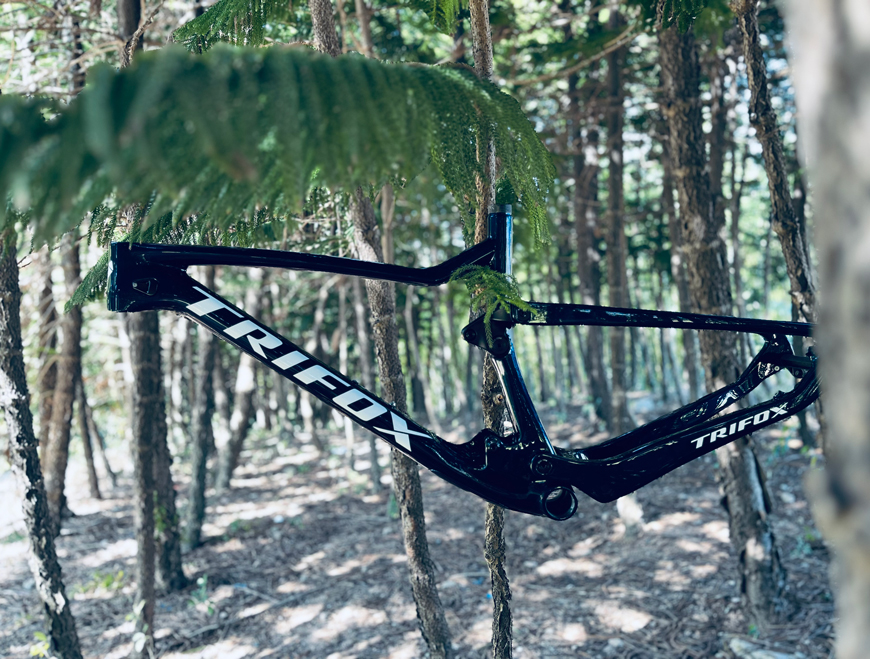
The age-old debate between hardtail (front suspension only) and full-suspension mountain bikes boils down to one question: What kind of rider are you? Let’s dissect the pros, cons, and ideal use cases for both setups to help you decide—and explore how brands like Trifox cater to diverse preferences.
Hardtail (Without Rear Suspension)
Pros:
- Lightweight: Fewer parts mean easier climbing and faster acceleration.
- Lower Cost: Affordable to buy and maintain (no rear shock or pivot bearings).
- Efficiency: Direct power transfer makes pedaling feel responsive, ideal for smooth trails or XC racing.
- Simplicity: Less maintenance and easier DIY repairs.
Cons:
- Rough Ride: Rear impacts are absorbed solely by your legs, leading to fatigue on technical terrain.
- Traction Limits: Less control on loose or rocky descents.
Full-Suspension
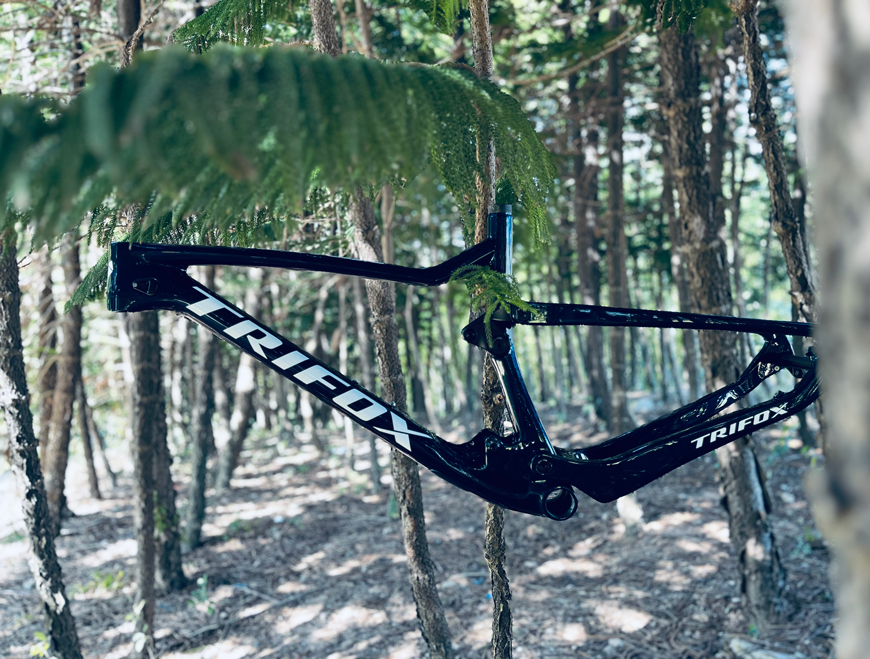
Pros:
- Comfort & Control: Rear shocks smooth out bumps, reducing fatigue and improving grip on chunky trails.
- Versatility: Confidently tackle downhill, enduro, or all-day adventures.
- Speed: Maintain momentum through rough sections.
Cons:
- Weight & Cost: Heavier frame and higher upfront/maintenance costs.
- Complexity: More moving parts mean more potential for mechanical issues.
Who Should Ride What?
- Choose a Hardtail If: You prioritize budget-friendly efficiency, ride smoother trails, or love climbing. Models like Trifox’s hardtails excel here, blending lightweight frames with trail-ready geometry.
- Choose Full-Suspension If: You crave technical descents, endurance rides, or park laps. Trifox’s full-suspension bikes offer balanced travel and durability for aggressive terrain.
Key Considerations
1. Terrain: Rocks, roots, and drops? Full-suspension shines. Pavement or flow trails? Save weight with a hardtail.
2. Budget: Hardtails cost less upfront and long-term.
3. Skill Level: Beginners may appreciate a hardtail’s simplicity; advanced riders often leverage full-squish capabilities.
There's no “better” option—only what's better for you. Hardtails reward efficiency and simplicity, while full-suspension bikes unlock technical prowess and comfort. Test both if possible, and consider Trifox’s range to match your riding style. Whether you're chasing KOMs or sending drops, the right suspension setup ensures every ride feels like freedom.
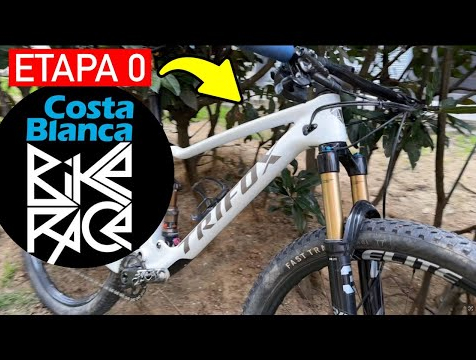
Mountain bikers, assemble! We’ve got something that's going to blow your mind—a surprise unboxing that might just reveal a glimpse of the future of mountain biking. Could this be a 2025 MTB?
In this thrilling video, we crack open a mysterious package that could be hiding the next big thing in trail technology. From the moment the box is opened, it’s clear this bike is something special. The sleek design, advanced components, and innovative features have us wondering if this is a prototype of what’s to come in 2025.
If you're as excited about full-suspension mountain bikes as we are, you’ll want to check out Trifox Bike’s incredible lineup. The full-suspension models are built for performance, durability, and all-out trail domination. Explore their collection here: Trifox Full-Suspension Mountain Bikes.
Whether this unboxing reveals a 2025 model or just a taste of cutting-edge innovation, one thing's for sure: the future of mountain biking looks incredibly bright. Don’t miss out—watch the video, share your thoughts, and get ready to hit the trails in style!



