








When choosing a full suspension mountain bike frame, getting the right size is crucial. Many riders focus only on wheel size and suspension travel, overlooking whether the frame dimensions actually fit their body proportions.
A properly sized frame not only affects riding comfort but also directly influences handling, safety, and pedalling efficiency.
So, how do you correctly measure a Full Suspension Mountain Bike Frame? This article covers the key measurements you need to know.
What dimensions matter when measuring a full suspension frame?
Compared with a hardtail, a full suspension frame has a more complex structure, so you cannot simply look at seat tube length.
The main parameters to consider are:
1. Reach
Reach is the horizontal distance from the bottom bracket centre to the top centre of the head tube.
It determines how far the rider's body is from the handlebar when standing and pedalling.
For Trail, Enduro, or full‑suspension XC bikes, Reach is a critical handling parameter.
If Reach is too short, the bike feels cramped; if too long, it can make handling difficult.
2. Stack
Stack is the vertical height from the bottom bracket centre to the top of the head tube.
It affects how high or low your riding posture is.
A higher Stack generally offers a more comfortable and stable ride, while a lower Stack leans towards a racier, speed‑oriented position.
3. Seat Tube Length
Seat tube length determines the maximum dropper post length you can install, and also affects standover height.
When choosing a frame, ensure there is enough clearance when standing over the top tube.
Wheel size is also an important factor
Currently, 29‑inch full suspension mountain bikes are the most popular on the market.
Compared with 27.5‑inch models, a 29 full suspension mountain bike frame offers better rollover capability and high‑speed stability.
The 29‑inch wheels roll more easily over rocks, roots, and rough terrain, making them ideal for XC, Trail, and long‑distance off‑road riding.
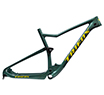
TRIFOX MFM100: Lightweight carbon full suspension frame
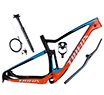
If you are looking for a high‑performance full suspension mountain bike frame, take a look at the TRIFOX MFM100 Carbon Full Suspension MTB Frame.
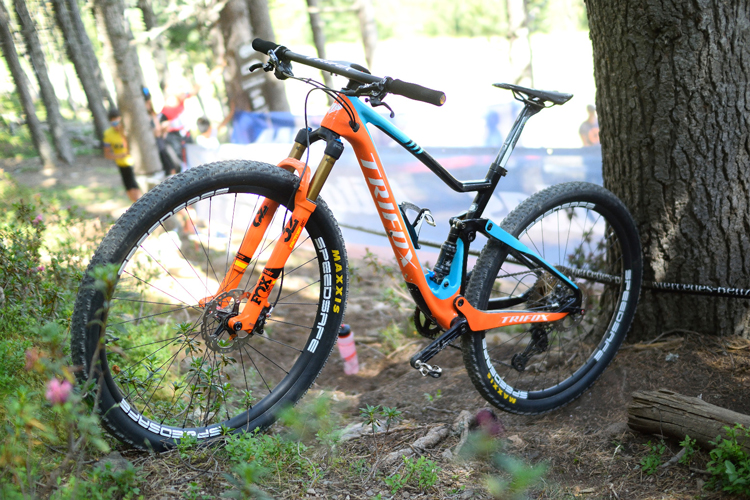
The MFM100 is crafted from high‑quality carbon fibre, striking a great balance between light weight, stiffness, and suspension performance – making it an excellent carbon full suspension mountain bike frame for XC and Trail riding.
Key features include:
- Full carbon fibre frame construction
- 29‑inch wheel design
- Full suspension system for improved rough‑terrain capability
- 115mm adjustable rear travel
- Boost 148×12mm rear axle standard
- Wide tyre clearance for enhanced stability
- Lightweight design for better climbing efficiency
Whether on fast singletrack, XC races, or long backcountry rides, the MFM100 delivers stable and reliable performance.
How to choose the right full suspension frame size for you?
As a general guideline:
- Smaller riders usually suit size S/XS.
- Average‑height riders often choose size M.
- Taller riders or those who prefer more stability can consider size L.
However, beyond height, you should also consider leg length, riding style, and personal preference.
If you prefer nimble handling, a slightly smaller size may work; if you prioritise high‑speed stability, a larger size is often better.
Conclusion
Measuring a full suspension mountain bike frame is not just about looking at the size label – you need to consider Reach, Stack, seat tube length, wheel size, and your riding needs.
A correctly sized frame makes your rides more comfortable and allows the bike to perform at its best.
If you are looking for a lightweight, high‑performance carbon full suspension mountain bike frame, the TRIFOX MFM100, with its carbon construction, 29‑inch wheels, and capable suspension design, is an ideal choice for upgrading your full‑suspension mountain bike.
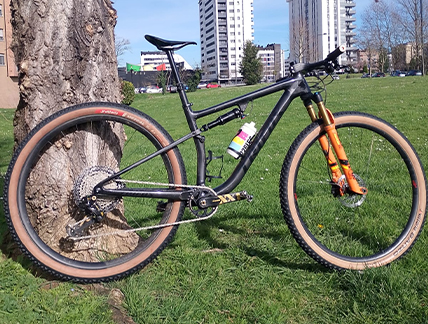
For cyclists preparing to upgrade their mountain bike, a frequently debated question is: is a lightweight carbon XC frame really worth the extra cost over an otherwise identical aluminum frame?
As carbon fiber manufacturing technology becomes more mature, the price gap between the two has gradually narrowed, leading more riders to consider upgrading to a carbon frame. So, is it really worth it? Let's break it down from several angles.
The weight advantage remains significant
Weight is one of the biggest advantages of a carbon frame.
In XC (Cross Country) riding, frequent acceleration, climbing, and long-distance rides are all affected by bike weight. A lightweight carbon frame helps riders reduce energy expenditure and improve pedaling efficiency.
Compared to an equivalent aluminum frame, carbon typically saves several hundred grams. While that number may not seem huge, over long rides or in races, the difference becomes noticeable.
For riders chasing speed and efficiency, lightweight construction remains a compelling reason to upgrade.
A more comfortable ride experience
Beyond weight, carbon has another clear advantage – vibration damping.
Carbon fiber effectively filters out vibrations from gravel roads, trails, and rough terrain, making the ride smoother.
For a Carbon MTB frame full Suspension, the suspension system handles large impacts while the carbon frame further reduces small vibrations. Together, they significantly enhance overall ride comfort.
On long rides, this advantage is especially noticeable, reducing arm and leg fatigue and improving overall riding efficiency.
Superior stiffness and handling
Modern carbon frames are not only light but also offer excellent stiffness.
Well-engineered carbon layups allow pedaling power to transfer more directly to the rear wheel, delivering sharper handling during acceleration, climbing, and high-speed cornering.
For XC racing and fast trail riding, precise steering and stable frame feedback often matter more than simply shedding weight.
Does aluminum still have advantages?
Absolutely.
Aluminum frames are more affordable and cheaper to maintain.
If your riding is mainly recreational, commuting, or occasional off-road, aluminum remains a very practical choice.
But for riders looking to improve efficiency, tackle more challenging routes, or compete, the overall performance gains from a carbon frame are usually worth the investment.
TRIFOX Trail II Pro: A lightweight XC full suspension frame
If you're looking for a Carbon MTB frame full Suspension that balances weight, stiffness, and comfort, the TRIFOX Trail II Pro is worth a closer look.
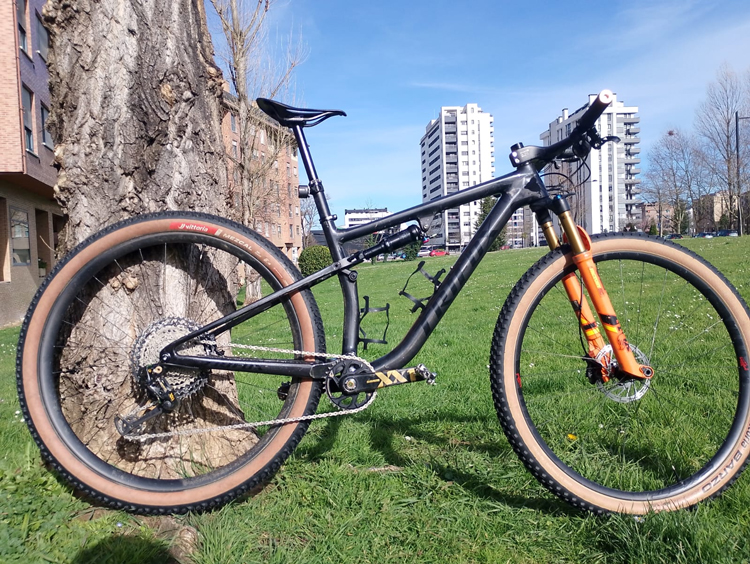
The Trail II Pro is purpose-built for XC and trail riding, featuring a lightweight carbon fiber construction and a modern full-suspension platform that delivers an efficient riding experience.
Key features include:
- Lightweight carbon fiber frame design
- 29-inch wheel compatibility
- Full suspension for improved terrain handling
- Excellent frame stiffness and pedaling efficiency
- Stable handling at high speeds
- Suitable for XC training, trail challenges, and long-distance rides
With its balanced performance and quality craftsmanship, the Trail II Pro has also gained attention as one of the best chinese carbon xc frame options among overseas riders, striking a solid balance between performance and value.
Who is a carbon frame best for?
Upgrading to a carbon frame offers greater value if you fall into any of these categories:
- You want to build a lighter XC mountain bike.
- You frequently race or ride long distances.
- You enjoy climbing and technical routes.
- You demand higher pedaling efficiency and handling precision.
- You plan to further upgrade wheels, forks, and other high-performance components.
By contrast, if you ride only occasionally, an aluminum frame will still meet most everyday needs.
Conclusion
Is a lightweight carbon XC frame worth it? For performance-oriented riders, the answer is usually yes.
While aluminum frames still offer good durability and value, carbon's combined advantages in weight, comfort, stiffness, and handling make it the preferred choice for a growing number of XC riders and trail enthusiasts.
If you're looking for a Carbon MTB frame full Suspension that delivers light weight, capable suspension, and strong value, the TRIFOX Trail II Pro is certainly worth adding to your upgrade list. It handles daily training with ease and helps you perform better in races and on challenging terrain.
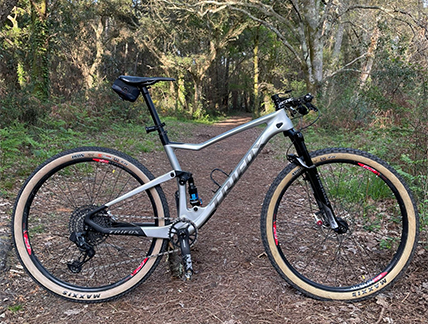
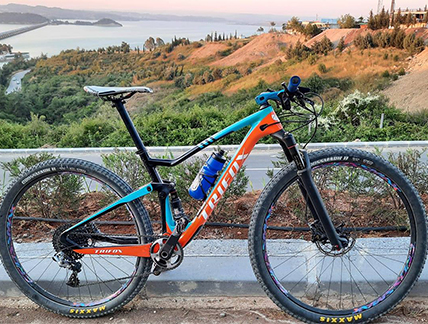
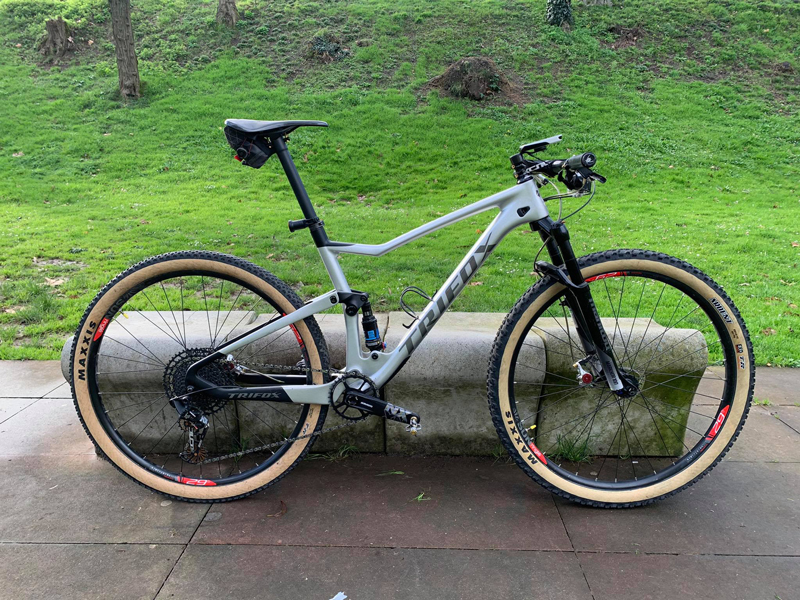
The wait is finally over. Two of the most iconic colorways from Trifox—the sophisticated Titane and the vibrant Orange & Blue—have returned to the MFM100 lineup. These frames were previously some of the most sought-after configurations, and they are now back in stock for a limited time. If you've been waiting to build a carbon boost mtb frame that turns heads and conquers trails, this is your moment.
A Frame That Demands Attention
The MFM100 has always been more than just a full-suspension frame. It's a statement of intent. Built from high-quality T800 carbon fiber, it delivers the perfect blend of strength, rigidity, and lightweight performance. The Titane finish offers a sleek, understated elegance that looks fast even when standing still. Meanwhile, the Orange & Blue paint scheme is a bold, race-inspired design that announces your arrival on the trail. Both finishes are applied with the same attention to detail that defines every aspect of this frame.
Performance That Matches the Look
Underneath the stunning paint, the MFM100 is a serious carbon xc mountain bike frame designed for off-road enthusiasts who demand exceptional performance and durability. The frame features a Boost 148 x 12mm rear axle spacing, which provides a stronger and stiffer rear wheel for enhanced tracking and control. The 68.5° head tube angle and 74.7° seat tube angle deliver confident, capable handling that climbs efficiently and descends with composure. Whether you're racing XC or exploring rugged backcountry trails, this frame is built to perform.
The frame also features a Trunnion rear shock mount for efficient pedaling and an asymmetric design that ensures a smooth structure and unobstructed cable movement. Internal cable routing keeps the bike looking clean and protects cables from the elements. With clearance for tires up to 29 x 2.35″, the MFM100 is ready for a wide range of trail conditions. Available in four sizes—15.5″, 17.5″, 19″, and 20.5″—this frame fits riders from 150cm to 195cm.
Limited Stock – Act Fast
These colorways have a history of selling out quickly, and this restock is no exception. Riders who have built up the MFM100 consistently praise its "excellent quality" and "superior comfort". One reviewer described it as "very reactive when you hit it with acceleration … the force you apply to the pedals goes directly to the wheels." On descents, users report that the bike "tracks straight on steep, rocky runs" and stays composed under hard hits. If you want to experience the balance of climbing efficiency and descending confidence that this carbon xc mountain bike frame offers, don't wait.
Head to the product page now to secure your Titane or Orange & Blue MFM100 before they disappear again.
Links
Trifox MFM100 Carbon Full-Suspension Frame

The mountain bike industry has a habit of changing standards just when you think you’ve settled on a dream build. Rear axle spacing, derailleur hangers, tire widths—all have shifted over the past decade, often leaving older frames incompatible with newer, better components. If you’re investing in a disc brake bike frame today, you want to be sure it can accept tomorrow’s drivetrains, wheels, and tires. The Trifox TRAIL II PRO is engineered with three key modern standards: Boost 148mm spacing, a Universal Derailleur Hanger (UDH), and generous tire clearance. Here’s why those specs matter for the future.
Boost 148: The Foundation of Future Wheel Stiffness
Boost 148x12mm rear spacing has rapidly become the industry benchmark for mountain bikes. By widening the hub flanges compared to older 142mm or 135mm standards, Boost creates a significantly stiffer rear wheel through improved spoke bracing angles. This isn‘t just a performance upgrade—it’s a compatibility necessity. Nearly every modern frame, fork, and wheelset uses Boost spacing today, and the standard is likely to remain dominant for years. Choosing a non-Boost frame means limiting your wheel and hub options. The TRAIL II PRO’s Boost 148mm thru-axle dropout ensures you’ll have access to the best wheels on the market now and in the foreseeable future, from lightweight XC race hoops to rugged trail builds.
UDH: Your Gateway to Next-Generation Drivetrains
The Universal Derailleur Hanger (UDH) is arguably the most important future-proofing feature on any modern frame. Originally developed by SRAM, the UDH standardizes the derailleur mounting interface across all bikes. This has two profound benefits. First, it eliminates the hunt for frame-specific hangers—replacements are now universal. Second, and more critically, the UDH is the mandatory interface for SRAM’s revolutionary Transmission and Full Mount drivetrains. These next-generation systems mount the derailleur directly to the frame, bypassing a traditional hanger entirely for unmatched shift precision and crash durability. A frame with a UDH is compatible with all current derailleurs and ready for whatever full‑mount systems the future holds. The TRAIL II PRO’s UDH dropout ensures you won‘t be left behind as drivetrain technology evolves.

Tire Clearance: Room to Grow as Rubber Expands
Tire widths have been steadily increasing across all mountain bike disciplines. XC race tires that were once 2.1” are now routinely 2.4”, with 2.6” options appearing for more aggressive terrain. The TRAIL II PRO is designed with 29 x 2.25” as its official clearance, but real-world experience shows the frame can accommodate a 2.3” tire in dry conditions, and some owners have successfully mounted 2.4” rubber on standard rims. This generous clearance means you’re not locked into narrow tires as the industry trend toward wider, more capable rubber continues. Whether you want the grip of a 2.4” for loose races or the volume of a 2.6” for trail adventures, the TRAIL II PRO has the breathing room to adapt.
Built for Tall Riders Too: The 19‑Inch Frame Option
The TRAIL II PRO is available in 17” and 19” sizes. For taller riders, the 19 inch bike frame provides a roomy reach (470mm) and taller stack (606.1mm), accommodating riders from 175–190cm without compromising the frame’s progressive 67.5° head tube angle. Importantly, the future-proofing benefits—Boost, UDH, and tire clearance—scale across both sizes, ensuring tall riders enjoy the same long-term compatibility as their shorter counterparts.
Why These Standards Matter for Your Wallet
Buying a frame that anticipates future standards isn’t just about performance; it’s about value. A frame that can accept new drivetrains, wider wheels, and larger tires won’t become obsolete quickly. You can upgrade components piecemeal over years, breathing new life into the bike without replacing the chassis. The TRAIL II PRO’s T800 carbon construction, internal routing, and threaded BB68 bottom bracket further enhance its longevity. When you invest in this disc brake bike frame, you’re not just buying a bike for this season—you’re buying a platform that will remain competitive and compatible for seasons to come. Future-proof your build today.
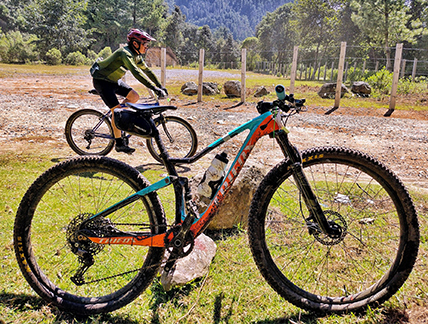
For years, mountain bikers believed you had to choose: an efficient climbing bike or a confident descending bike. A short-travel XC race machine would dance up climbs but leave you white-knuckled on steeps, while a long-travel bruiser could plow through anything but felt like pedaling a couch uphill. The compromise seemed inevitable — until modern carbon full‑suspension engineering changed the rules.
The Trifox MFM100 frameset is designed to deliver the best of both worlds. Whether you‘re chasing a podium in an XC race or enjoying an all‑day trail adventure, this T800 carbon platform proves you can have climbing efficiency and descending confidence in one bike.
Geometry: The Foundation of Versatility
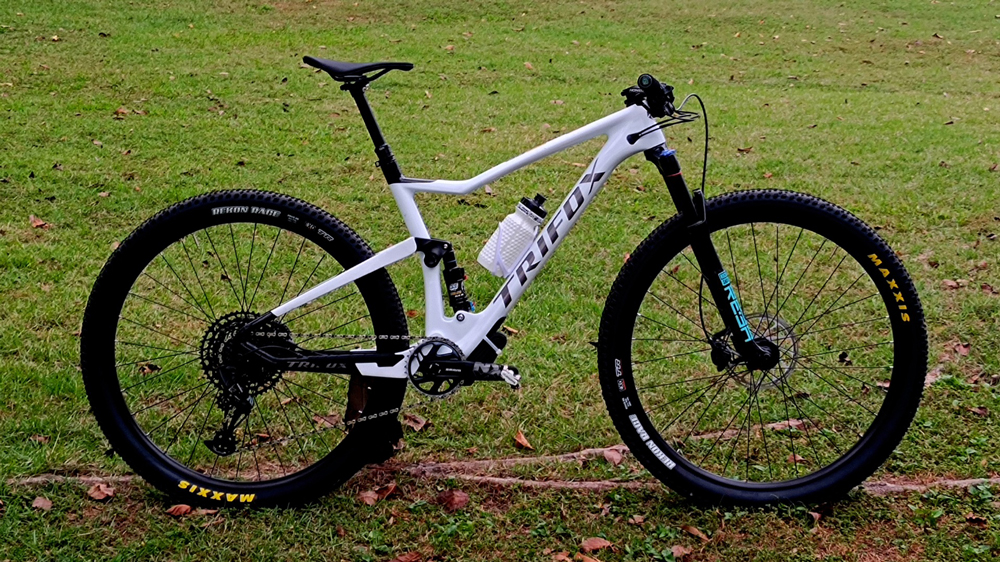
A frame’s geometry determines how it responds to rider input. The MFM100 uses a carefully balanced 68.5° head tube angle and 74.7° seat tube angle — numbers that sit right in the sweet spot between XC urgency and trail stability.
The slightly slacker head angle (compared to traditional XC bikes) provides confidence on descents, keeping the front wheel planted and stable at speed. Meanwhile, the steeper effective seat tube angle places the rider directly over the bottom bracket for efficient power transfer on climbs. This combination creates a bike that climbs with authority and descends with composure — no compromises needed.
For riders in the market for a medium bike frame, the MFM100’s M size (17.5“) offers a 440mm seat tube and a generous 470.2mm reach, providing a spacious yet planted cockpit for riders from 170‑185cm. The proportional geometry across all four sizes (XS, S, M, L) ensures every rider gets the same balanced handling characteristics.
Suspension Kinematics: The Science of Simultaneous Efficiency
The real magic happens in the rear suspension. The MFM100 employs a Horst‑link four‑bar linkage, a proven design that separates pedaling forces from bump forces. The key is the anti-squat curve — a measure of how the suspension resists compressing under pedaling loads.
At the sag point (where the bike sits with a rider on board), the anti-squat is tuned high enough to resist pedal bob, keeping the bike stable and efficient during seated climbing. But deeper in the travel, the anti-squat tapers off, allowing the suspension to absorb impacts without harshness. Meanwhile, the anti-rise curve (which affects suspension behavior under braking) is tuned to keep the rear wheel active and glued to the trail even when you‘re grabbing anchors on a steep chute.
This sophisticated kinematics tuning is paired with a Trunnion‑mounted rear shock — a design that reduces friction and allows for a more linear, predictable suspension feel. The Trunnion mount eliminates long eyelets, saving weight and enabling cleaner frame lines, while improving small‑bump sensitivity for better traction on loose or choppy terrain.
Together, these design elements create a bike that climbs with the urgency of a hardtail (no wasted energy from pedal-induced bob) yet descends with the plushness and control of a bike with much more travel.
Carbon Construction: Where Stiffness Meets Compliance
Carbon fiber’s anisotropic nature is the final piece of the puzzle. Unlike aluminum, which has uniform stiffness in all directions, carbon allows engineers to orient fibers to be stiff exactly where needed and compliant exactly where desired.
In the MFM100’s T800 carbon layup, high‑modulus fibers are oriented along the downtube and chainstays to resist pedaling forces and prevent wasteful flex. Yet the same structure allows controlled flex in the seatstays, absorbing rear‑wheel impacts and reducing vibration transmitted to the rider. This selective stiffness is the reason a carbon full-suspension frame can feel both rigid under power and forgiving over rough ground.
The result is a frame that weighs just 2,235g (size M, including hardware) — impressively light for a full‑suspension chassis — yet provides the lateral rigidity needed for precise cornering and the vertical compliance that keeps you fresh hour after hour.
Boost Spacing and Modern Standards
The MFM100 fully embraces modern mountain bike standards. Boost 148x12mm rear spacing (with a 15x110mm fork interface) widens the hub flanges, creating a stiffer, stronger rear wheel that tracks more accurately through corners and resists flex under hard pedaling. Internal cable routing keeps the frame clean and protects hoses from trail debris.
Real‑World Rider Feedback
Riders who have built up the MFM100 consistently praise its balanced character. One owner noted the bike is “very fast and rigid … the suspension behaves very well, absorbing small irregularities in the terrain and it does not rock anything at all.” Another described it as “very reactive when you hit it with acceleration … the force you apply to the pedals goes directly to the wheels.” On descents, users report that the bike “tracks straight on steep, rocky runs” and stays composed under hard hits. This is the combination that makes a frame truly versatile: efficient power transfer for climbs and predictable, planted stability for descents.
Value: Premium Performance Without the Premium Price
Historically, a full‑carbon, full‑suspension frame with this level of engineering cost $2,000‑$3,000. The MFM100 disrupts that paradigm entirely. At just $899 (frequently on sale at $699‑$789 for certain sizes), it is a genuine best carbon frameset under 1000 — a full modern‑geometry, T800 carbon, Boost‑spaced chassis at a price normally reserved for high‑end aluminum frames.
To achieve this value, Trifox uses a direct‑to‑consumer model, eliminating retail markups. The result is a frame that punches well above its price class, offering the kind of balance between climbing and descending that typically requires spending two or three times as much.
Who Is This Frame For?
The MFM100 is the ideal platform for:
- Cross‑country racers who want efficient pedaling on climbs without sacrificing control on technical descents.
- Trail riders who cover varied terrain — climbs, descents, flow trails, and chunky sections — all in a single ride.
- Riders upgrading from an entry‑level hardtail, seeking the comfort and control of full suspension without a five‑figure investment.
- Value‑conscious builders who want a modern, capable, lightweight full‑suspension platform that won’t break the bank.
You no longer have to choose between a climbing bike and a descending bike. The Trifox MFM100 carbon full‑suspension frame proves that careful geometry, sophisticated suspension kinematics, and intelligent carbon layup can deliver the best of both worlds. It climbs with efficiency, descends with confidence, and offers exceptional value for riders who want a true one‑bike solution. Whether you‘re racing XC or exploring new trails, this frame is ready.
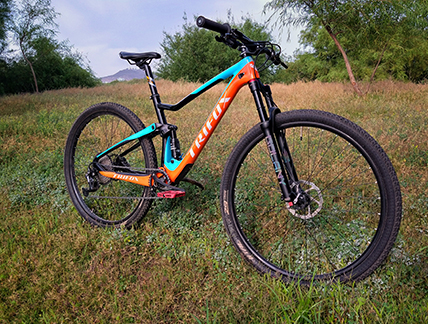
There’s a moment on every wet or muddy ride when the bike starts to feel… heavy. The rear triangle collects debris, the suspension linkage groans, and suddenly you’re pedaling a bike that feels like it’s packed with clay. Mud isn’t just messy; it can rob efficiency, damage moving parts, and cut a ride short. The Trifox MFM100 carbon fiber 29er frame is engineered with this reality in mind. Its thoughtful design doesn’t just prioritize stiffness and weight; it actively works to shed mud and keep you rolling when conditions turn sloppy.
Ample Tire Clearance: The First Line of Defense
The most obvious place mud accumulates is between the tire and the frame. The MFM100 offers generous clearance for tires up to 29 x 2.35 inches. This isn’t just about running wider rubber for traction; it creates crucial space for mud to pass through rather than packing up against the seat tube, chainstays, or fork crown. When the trail turns to peanut butter, that extra 5-10mm of clearance can be the difference between a bike that keeps rolling and one that grinds to a halt.
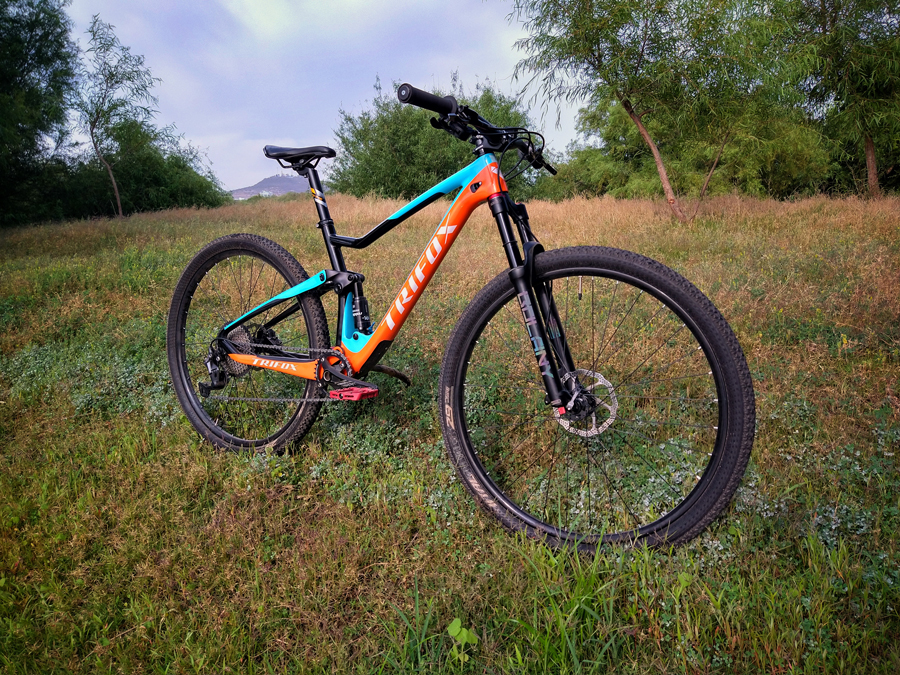
Asymmetric Rear Triangle: A Clean Path for Cables and Debris
A unique and often overlooked feature of the MFM100 is its asymmetric frame design. The rear shock is deliberately offset to create a smoother, more linear structure. This design choice serves a dual purpose. First, it allows the down tube to run unobstructed from the head tube to the main pivot, creating a clean internal channel for cable routing that keeps hoses and housings protected from mud and debris. Second, the asymmetric layout provides a more open space around the shock and linkage, giving mud and water a clear path to fall away rather than accumulate in tight crevices.
Internal Routing: Protection from the Elements
Nothing invites mud-induced failure like exposed cables and hoses. The MFM100 features full internal cable routing through the frame. Every brake hose, shift cable, and dropper post line is tucked inside the frame tubes. This isn’t just for a clean aesthetic; it’s practical protection. By eliminating external cable guides and exposed lines, there are fewer places for mud to cling, fewer entry points for grit to foul shifting performance, and less risk of cable damage from trail debris.
Boost 148: Stability in Slick Conditions
While not directly a mud-shedding feature, the Boost 148x12mm rear axle plays a critical role in maintaining control when traction is compromised. The wider hub spacing creates a stiffer, more robust rear wheel interface. When you’re riding through wet, slippery roots or muddy ruts, that added stiffness translates to better tracking and stability. You spend less energy fighting the bike and more time finding the clean line through the mess.
Built for the Long Haul
The MFM100’s T800 carbon construction is naturally resistant to the corrosion that plagues aluminum frames over time. Combined with sealed bearings in the linkage and a design that actively sheds mud, this frame is built to withstand repeated wet-weather rides without developing the creaks, groans, and corrosion that shorten the life of lesser frames. For riders seeking discount mountain bike frames that don’t compromise on smart, ride-enhancing engineering, the MFM100 offers exceptional value.
In short, the Trifox MFM100 is designed for riders who don’t wait for perfect conditions. Its generous tire clearance, asymmetric rear triangle, internal routing, and Boost stiffness work together to minimize the impact of mud and debris on your ride. It’s a frame that respects the fact that some of the best rides happen when the trails are messy—and it’s built to keep you rolling through it all.
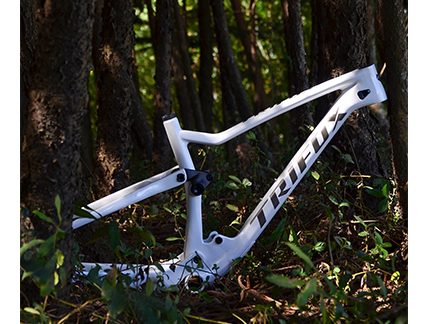
There’s a moment on every climb—the pitch steepens, the trail turns to loose rock, and gravity starts winning. Your legs burn, your lungs scream, and the bike feels like it’s fighting you. Now imagine that same climb, but the bike feels eager, responsive, and almost playful. That’s the difference a lightweight carbon frame can make. The Trifox MFM100 full suspension frame, built from high-modulus T800 carbon fiber, transforms the uphill experience, allowing you to climb faster, conserve energy, and ultimately ride longer.
Why Weight Matters Most on the Climb
Physics is simple: moving less mass uphill requires less energy. Every gram saved on a frame is a gram you don’t have to haul to the top. But the MFM100’s weight advantage goes beyond the number on a scale. Its T800 carbon fiber construction allows for a remarkably low frameset weight—starting at just 2170g for the XS size, including hardware. This weight savings is concentrated at the heart of the bike, improving the bike’s power-to-weight ratio where it matters most: when you’re out of the saddle, grinding up a steep grade.
More importantly, weight loss at the frame contributes to a better overall system efficiency. A lighter bike accelerates faster out of corners, requires less effort to maintain momentum on rolling terrain, and feels less punishing when you need to carry speed over short, punchy climbs. For riders seeking a small full suspension mountain bike frame, the MFM100’s low weight in the XS and S sizes (fitted with 27.5” wheels) offers an even more pronounced advantage, making the bike feel nimble and flickable on technical climbs.
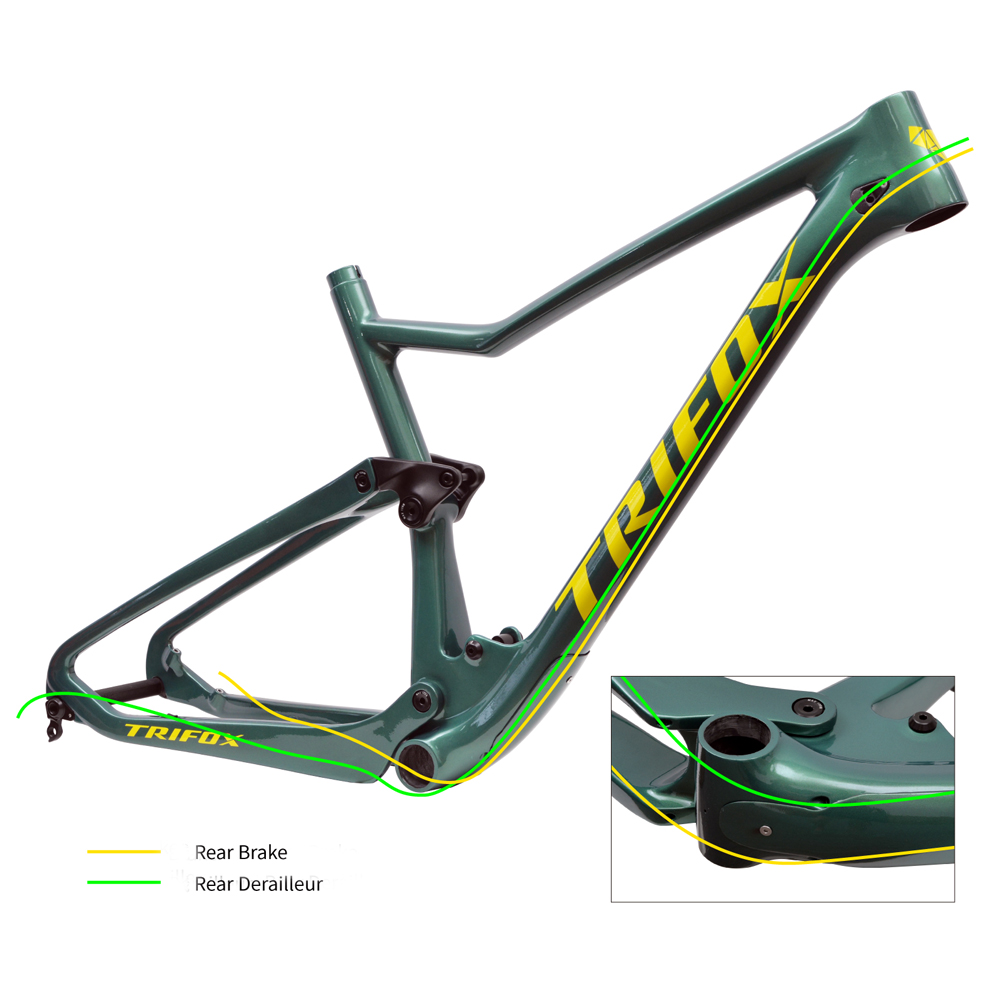
Efficiency Through Stiffness and Suspension Design
Light weight alone isn’t enough. A climbing bike must also convert your energy efficiently into forward motion. The MFM100’s carbon layup is engineered for exceptional pedaling stiffness, particularly in the bottom bracket and chainstay area. This means less of your power is wasted flexing the frame. The suspension kinematics are equally critical. The Trunnion-mounted rear shock and Boost 148mm rear axle work together to create a platform that minimizes pedal-induced bob while remaining active enough to maintain traction on loose or uneven surfaces. The result is a bike that climbs with the urgency of a hardtail but offers the rear-wheel grip of a full-suspension machine.
More Energy for the Descent
The real reward of a lightweight frame isn’t just a faster climb time; it’s the energy you save for the rest of the ride. By requiring less effort to ascend, you arrive at the summit with fresher legs, a clearer mind, and more reserves to enjoy the descent. On a long backcountry loop or an all-day trail adventure, this cumulative energy savings translates directly into riding longer, with greater control and less fatigue. For taller riders, the carbon fiber 29er frame in sizes M and L offers the same efficiency benefits, ensuring that even larger-wheeled bikes don’t feel sluggish on the way up.
A Versatile Platform for Every Rider
The MFM100 is available in four sizes—XS, S, M, and L—with a geometry that balances aggressive XC efficiency with modern trail stability. Its 68.5° head tube angle and 74.7° seat tube angle place the rider in a powerful, centered position for climbing, while the 438mm chainstays provide stability and traction. Clearance for up to 29x2.35” tires means you can run high-volume rubber for comfort and grip without adding unnecessary rotational weight.
Ultimately, the Trifox MFM100 demonstrates that a full suspension carbon frame can be both a climbing weapon and a descending ally. Its lightweight T800 carbon construction, efficient suspension design, and modern geometry work in harmony to help you climb faster, conserve energy, and ride longer. Whether you’re chasing PRs or simply want to enjoy more trail with less fatigue, this frame delivers a real-world benefit that transforms every ride.
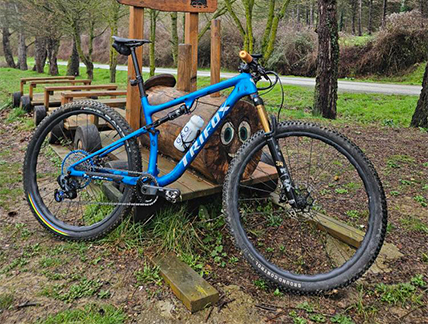
In the pursuit of a high-performance mountain bike, the frame is the ultimate foundation. It dictates not only the ride quality but also your ability to upgrade and maintain the bike with the latest components. The Trifox TRAIL II PRO carbon fiber 29er frame is engineered with a clear focus on modern, durable, and versatile standards. Its commitment to three key specifications—the Universal Derailleur Hanger (UDH), Boost 148 spacing, and the threaded BB68 bottom bracket—ensures it delivers peak performance today and remains adaptable for years to come.
UDH: Universal Protection and Next-Gen Readiness
The TRAIL II PRO features a Universal Derailleur Hanger (UDH), a seemingly small component that represents a massive step forward. This standardized hanger, developed by SRAM, is rapidly becoming the industry norm. Its presence on this frame offers two monumental advantages. First, it provides total compatibility with SRAM's latest direct-mount Transmission drivetrains, which require the UDH interface. This means your frame is ready for the cutting edge of drivetrain technology. Second, the UDH is engineered to be a sacrificial component. In a crash, it's designed to break in a controlled manner, absorbing impact forces and protecting the far more expensive derailleur and the frame's dropouts. Replacement is simple and the hangers are widely available—a true peace-of-mind feature for any rider.
Boost 148: The Stiffness and Strength Standard
Modern trail and XC riding demands a stiff and durable rear end. The TRAIL II PRO is built around the Boost 148x12mm axle standard. This wider hub spacing (148mm compared to the older 142mm) allows the hub flanges to be positioned further apart. This simple geometry change results in a stiffer, stronger rear wheel when paired with a Boost-compatible hub. A stiffer wheel tracks more accurately, corners with greater precision, and resists flex under hard pedaling and braking. Boost also enables frame designers to optimize chainstay length, as seen in the TRAIL II PRO's balanced 437mm stays, for improved traction without sacrificing agility.
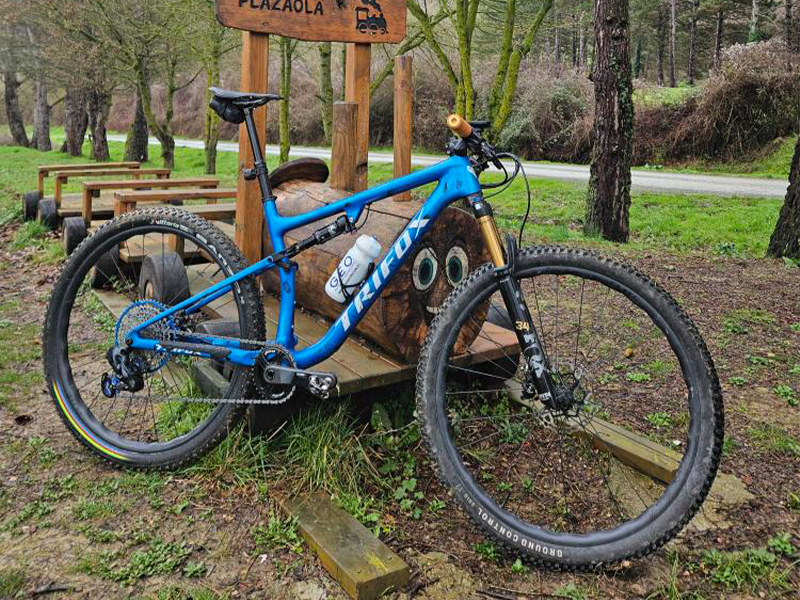
BB68: The Reliability of Threaded Simplicity
At the heart of the frame lies a BB68 threaded bottom bracket shell (BSA standard). In an era where press-fit bottom brackets are common, Trifox's choice of a threaded interface is a deliberate nod to long-term reliability and ease of maintenance. A threaded BB, like the BB68, is simply creak-proof compared to press-fit designs. Installation is straightforward with standard tools, and it provides a solid, immovable platform for your crankset. This ensures maximum power transfer and eliminates the annoying creaks that can plague press-fit shells over time. For a best chinese bike frame, this focus on a reliable, serviceable standard is a hallmark of thoughtful engineering.
A Lightweight, High-Performance Package
Beyond these modern standards, the TRAIL II PRO is a meticulously crafted T800 carbon fiber frameset. In the popular 17 inch bike frame size, it weighs an impressive 1680g (±20g) complete with hardware. Its geometry—a 67.5° head tube angle and 74.5° seat tube angle—is tuned for aggressive XC and trail riding, offering stability on descents while remaining efficient on climbs. With internal cable routing, clearance for 29x2.25" tires, and compatibility with 160/180mm rotors, it's a complete, modern platform.
Ultimately, the TRAIL II PRO's commitment to UDH, Boost, and BB68 is a commitment to you, the rider. It means choosing a carbon fiber 29er frame that isn't just light and stiff, but also intelligently designed to work with the best components available now and in the future. For riders seeking a durable, high-performance, and future-proof foundation, this frame represents an outstanding choice.

In the world of mountain biking, the choice of frame is dictated by the trail ahead. At opposite ends of the spectrum sit the XC Racer (Cross-Country) and the DH Sled (Downhill). Both are often crafted from premium carbon fiber, but their design philosophies are worlds apart. Understanding this difference is key to choosing a bike that matches your terrain and riding style. And for the vast majority of riders, a modern trail platform like the Trifox MFM100 represents the ideal middle ground.
The XC Racer: Built for Speed and Efficiency
An XC race bike is a scalpel. Its carbon frame is designed to be as light as possible, prioritizing pedaling stiffness and climbing efficiency above all else. You'll find steep seat tube angles (around 74-75°) to put the rider in a powerful climbing position, and steeper head tube angles (69-70°) for quick, responsive steering at lower speeds. Suspension travel is minimal, typically 100-120mm, to keep the bike active on climbs and efficient on rolling terrain. The goal is to convert every watt of rider power into forward momentum as directly as possible. Riders on XC bikes are often found on smoother, less technical trails, racing against the clock. A rider on an xl bike frame in this category would be a tall athlete seeking a lightweight, climbing-focused weapon.
The DH Sled: Built for Gravity and Guts
At the other extreme is the downhill bike—a full-on assault vehicle. These frames are built to be absolutely bombproof, prioritizing stability and control at high speeds over light weight. Geometry is drastically slacker, with head tube angles often dropping below 63°, and wheelbases are stretched long to provide a planted feel on the steepest, roughest terrain. Suspension travel is massive, often 200mm or more, to absorb huge impacts. These bikes are not designed for climbing; they are shuttled or pushed to the top to unleash on the descent. A medium mtb frame in this category is built tough for the rider who lives for the gnarliest, most technical downhill tracks.

The Trail Bike: The Perfect Compromise
Between these two extremes lies the sweet spot: the trail bike. Frames like the Trifox MFM100 are engineered to offer a balanced blend of climbing capability and descending confidence. They feature modern geometry, such as a 68.5° head tube angle and a 74.7° seat tube angle, which provides stability on descents without sacrificing climbing efficiency. With around 115mm of rear travel (paired with a suitable fork), it can handle technical trail features while remaining an efficient all-day climber.
The MFM100's T800 carbon construction ensures it's lightweight and stiff, but its design—including a Press Fit BB92 bottom bracket and Boost 148mm spacing—is focused on creating a durable, responsive platform for aggressive trail riding. It's a bike that can be ridden up a mountain and then confidently descend, making it the ideal choice for riders who want one bike to do it all. Available in sizes from XS to L, including the popular medium mtb frame size, it caters to a wide range of riders seeking this versatile performance.
In the end, the choice is about where you ride. If your trails are all about going up fast, an XC bike is your tool. If you only point downhill, a DH sled is your ride. But for the rider who wants to experience the full mountain—climbing to earn the descent and descending to enjoy the climb—a modern, balanced trail frame like the Trifox medium mtb frame is the ultimate companion. It's the carbon fiber frame that says yes to the entire trail, not just one part of it.



